Sales tax by layer
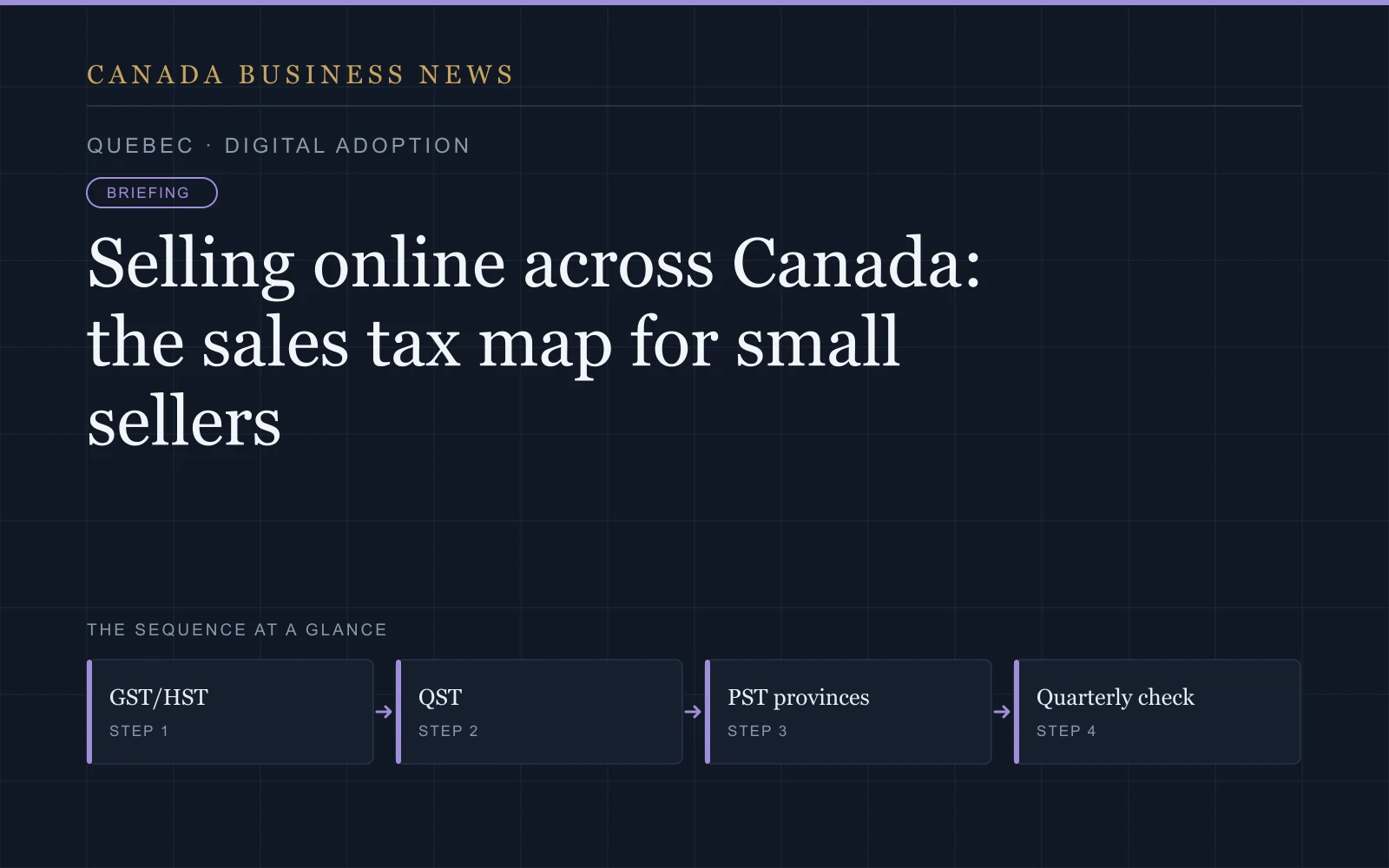
The registrations an interprovincial online seller has to map.
One federal registration; rate follows the customer's province under place-of-supply rules.
Separate Revenu Quebec registration and filings for Quebec sales.
B.C., Saskatchewan, and Manitoba run their own remote-seller triggers.
Sales by province reviewed against every threshold, each quarter.
Source basis: CRA GST/HST pages and Revenu Quebec
E-commerce turns a local firm into an interprovincial seller in one afternoon, and Canadian sales tax is organized by province. The seller who ships from Quebec to customers in four provinces is running a place-of-supply exercise on every order, whether or not anyone has told them.
The system is more navigable than it looks, but only for sellers who set the registrations up ahead of the volume.
The federal layer follows the customer
Once registered for GST/HST, a seller charges the rate of the customer's province for most goods shipped within Canada: HST rates in the harmonized provinces, GST alone in the others. The registration threshold is the same rolling $30,000 small-supplier test, and online marketplaces may collect on a seller's behalf under platform rules, which changes bookkeeping but not the seller's need to understand its own status.
The CRA's GST/HST pages carry the rate tables and place-of-supply rules; wiring them into the store's checkout settings once, correctly, is the whole federal game.
The Quebec layer is its own system
The Quebec Sales Tax is administered by Revenu Quebec as a separate registration, separate filings, and separate rules, harmonized in substance with GST but not in administration. A Quebec-based seller handles QST on Quebec sales alongside GST/HST on the rest; sellers outside Quebec with sufficient Quebec sales can also face specified registration obligations.
Quebec sellers should also remember the language obligations that apply to commerce, since the storefront, not just the tax, must comply.
Provincial sales taxes and the growth checkpoint
British Columbia, Saskatchewan, and Manitoba run their own PST regimes with their own registration triggers for remote sellers, so a seller whose volume into those provinces grows should check each province's rules rather than assuming the federal registration covers it.
The operating rhythm that keeps all of this manageable: a quarterly review of sales by province against each regime's thresholds, the same week the GST/HST small-supplier check runs. Growth is the trigger for every obligation in this briefing, and the quarterly check is how growth stops being a surprise.
Government links used for this briefing
These links point to federal, provincial, territorial, municipal, intergovernmental, or official data sources. Readers should confirm current eligibility and deadlines directly with the issuing government before applying.
Official CRA hub including rates and place-of-supply guidance for interprovincial sales.
Federal / ComplianceWhen to register for and start charging the GST/HSTCanada Revenue AgencyThe small-supplier test online sales count toward.
Provincial / ComplianceBusinesses and self-employed workersRevenu QuebecOfficial source for QST registration and filing obligations.
Provincial / ComplianceCharter of the French language - businessesOffice quebecois de la langue francaiseLanguage obligations that apply to Quebec storefronts alongside the tax layer.