Food-business approval stack
Three layers on one calendar, run in parallel.
Zoning, prior food use, and mechanical systems checked before the lease.
Municipal business licensing filed early.
Kitchen and routines designed to inspection criteria; staff certified during buildout.
Permits and construction sequenced with an inspection buffer before opening.
Source basis: City of Toronto business regulations and food safety pages
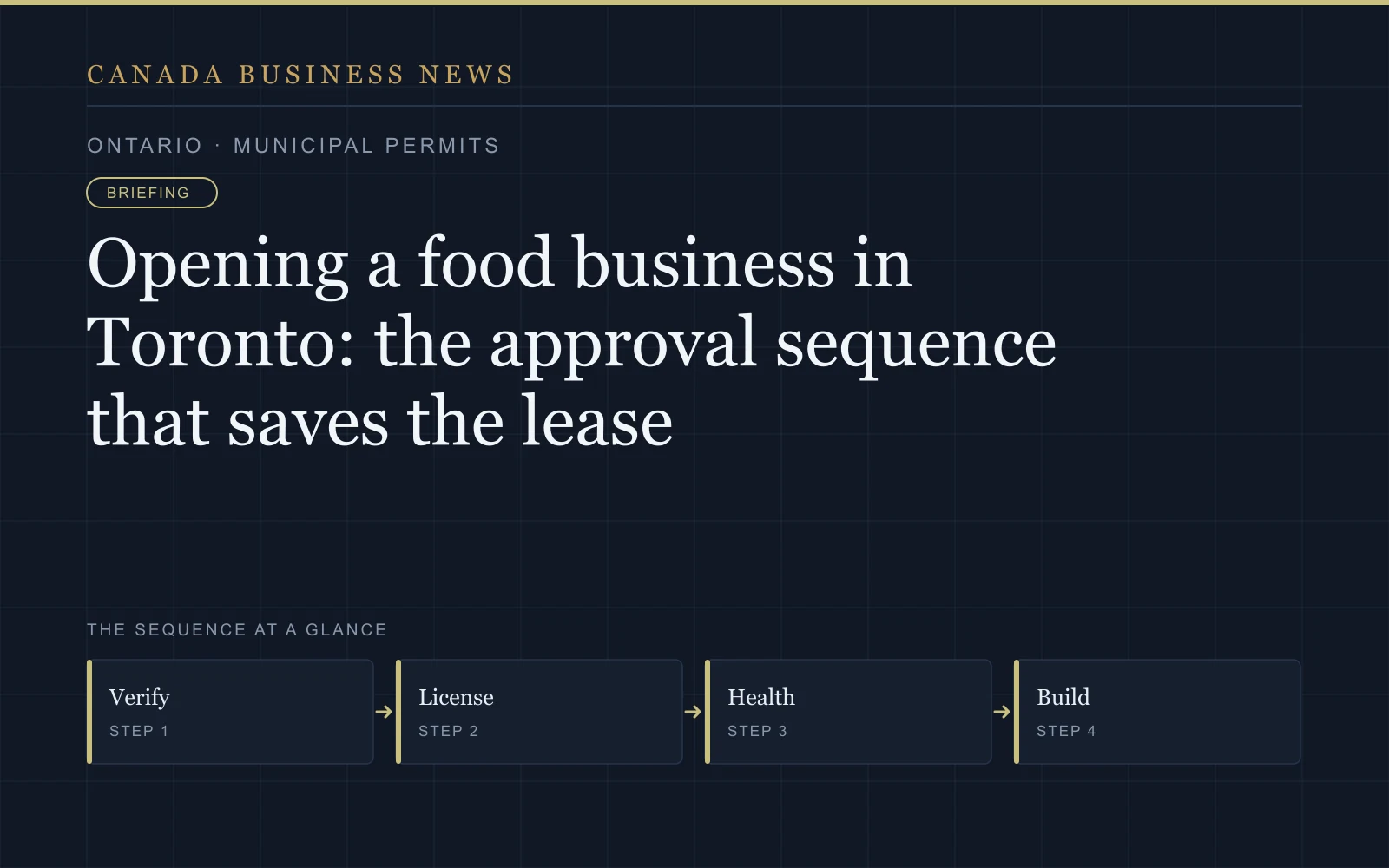
Food businesses carry the heaviest approval stack on main street: business licensing, public health requirements including inspections and food handler certification, and, for any buildout, building permits and possibly zoning review, all before the first legal sale. Each layer has its own clock, and the lease meter runs through all of them.
Toronto publishes the pieces, business regulations and licensing through the city, food safety through Toronto Public Health's DineSafe inspection regime, and the sequence is manageable for operators who run it as one project.
Verify the space before the lease
The single most expensive food-business mistake is signing for a space that was never a restaurant and discovering the conversion cost: ventilation, grease management, washrooms, and accessibility can turn a cheap lease into the most expensive one on the street. A space with recent food use and clean inspection history carries approvals a new conversion must earn.
Before signing, confirm zoning permits the use, review what the previous operator was licensed for, and have a contractor who knows food service walk the mechanical systems. An hour of verification prices the real project.
Running the approval layers in parallel
The licence application, health requirements, and any building permits should run simultaneously, not sequentially. Food handler certification for the required staff can be completed while the buildout proceeds; equipment layouts that public health will inspect should be designed to the requirements rather than adjusted after a failed visit.
Toronto's food safety pages describe what inspections verify: temperature control, sanitation, pest management, safe food handling. Designing the kitchen and the routines to those criteria makes the first inspection a confirmation rather than a negotiation.
The opening buffer
Permit timing briefings on this site make the general case; food service is its sharpest version. Build the calendar backward from a realistic opening date with an inspection buffer, keep the fixturing-period negotiation aligned to that calendar, and hold a cash reserve for the weeks the sequence adds. Food margins forgive slow openings badly; the buffer is what keeps a delay from becoming a crisis.
Government links used for this briefing
These links point to federal, provincial, territorial, municipal, intergovernmental, or official data sources. Readers should confirm current eligibility and deadlines directly with the issuing government before applying.
Municipal source for Toronto business licensing and regulatory requirements.
Municipal / ComplianceFood safetyCity of Toronto / Toronto Public HealthOfficial food safety and inspection information for Toronto food businesses.
Federal / PermitBizPaL permit and licence searchBizPaL / Government of Canada and participating governmentsOfficial cross-government permit search for a specific food-business scope.