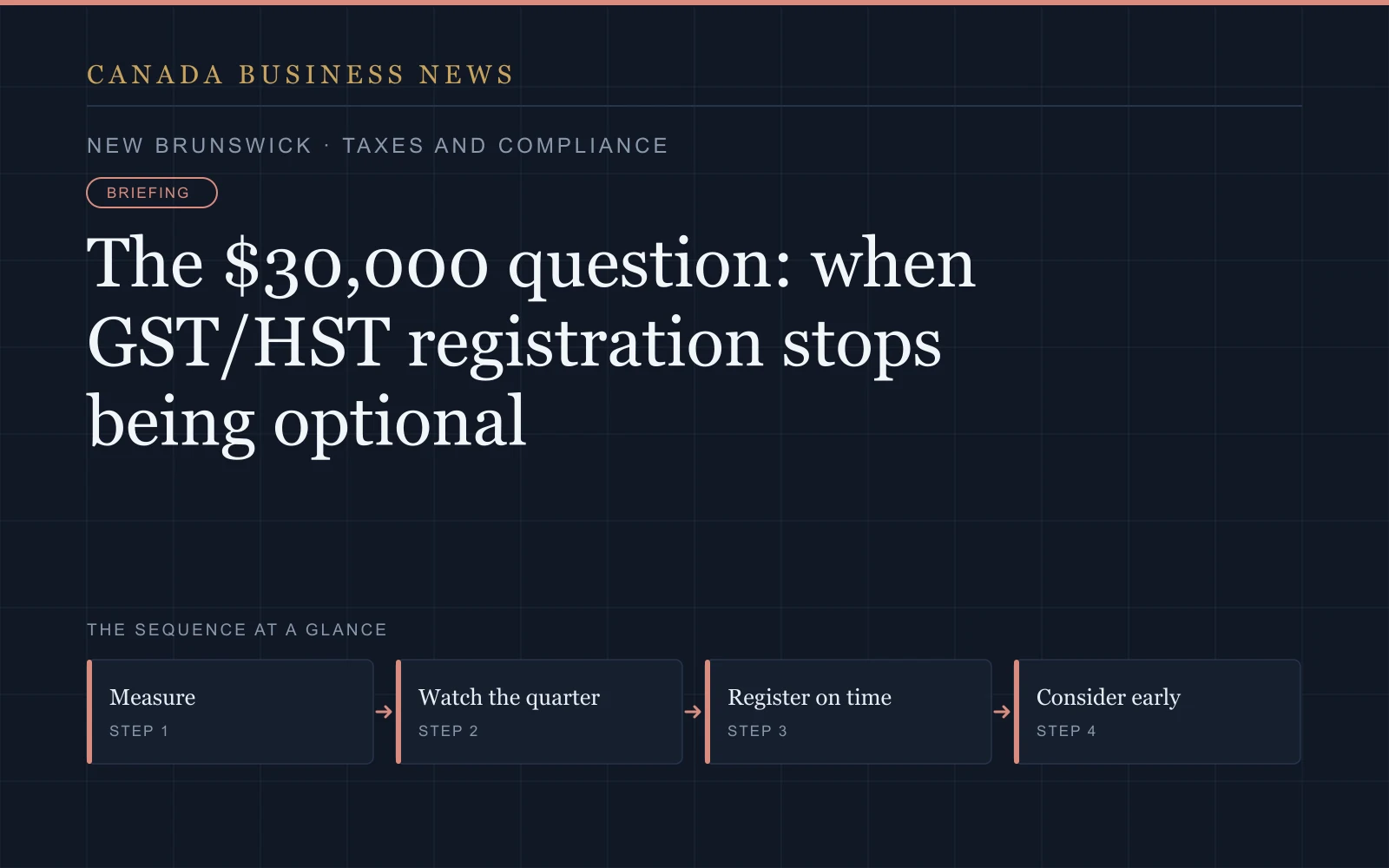
The small-supplier test
The rolling math that decides when collection becomes mandatory.
Taxable sales across the current and previous four consecutive calendar quarters, including associates.
A single quarter over $30,000 ends small-supplier status immediately.
Effective dates set when collection must start; late discovery means tax paid from margin.
Voluntary registration recovers input tax credits for firms investing ahead of revenue.
Source basis: CRA when-to-register guidance
Most Canadian owners can recite the number: $30,000. Far fewer can state the test correctly, and the difference is where the penalties live. The small-supplier rule looks at taxable sales across four consecutive calendar quarters, a rolling measure, not a calendar-year one, and a single big quarter can end small-supplier status on its own.
The rule matters twice: once when growth crosses the line, and once earlier, when registering voluntarily would quietly improve margins.
How the test actually works
A business is a small supplier while its worldwide taxable sales, including those of associated businesses, stay at or under $30,000 across the current and previous four consecutive calendar quarters. Exceed the threshold over that rolling window and registration becomes mandatory, with the CRA's when-to-register guidance setting the effective dates from which tax must be collected.
Exceed $30,000 in a single quarter and the small-supplier status ends immediately, with collection obligations starting on the sale that crossed the line. Owners tracking a strong season should be watching the quarterly number, not waiting for the accountant's year-end review.
The cost of finding out late
A firm that should have registered but kept invoicing without tax still owes the tax it failed to collect, and going back to customers for it ranges from awkward to impossible. The result is that the uncollected GST/HST comes out of the owner's margin, plus interest.
The defence is administrative, not clever: a quarterly revenue check against the rolling window, done the same week the quarter closes. Five minutes, four times a year, against a mistake that costs points of margin.
Why some firms should register early
Registration brings input tax credits: the GST/HST paid on the firm's own purchases, equipment, materials, software, professional fees, comes back. For a firm investing ahead of revenue, or selling mostly to registered businesses that recover the tax anyway, voluntary registration is often a straightforward win.
The trade-off is filing obligations and, for consumer-facing firms, a price that now carries tax. In HST provinces like New Brunswick the combined rate is significant, so a consumer-market firm near the line should model both paths before choosing. Once registered, the obligations are real either way; the choice is about timing them deliberately.
Government links used for this briefing
These links point to federal, provincial, territorial, municipal, intergovernmental, or official data sources. Readers should confirm current eligibility and deadlines directly with the issuing government before applying.
Official CRA guidance on the small-supplier test and the effective dates of registration.
Federal / ComplianceGST/HST for businessesCanada Revenue AgencyOfficial CRA hub for registration, charging, input tax credits, and filing.
Provincial / ProgramBusiness growth, financing and supportGovernment of New BrunswickProvincial supports for the growing firms this threshold decision affects.