How an EOT purchase works
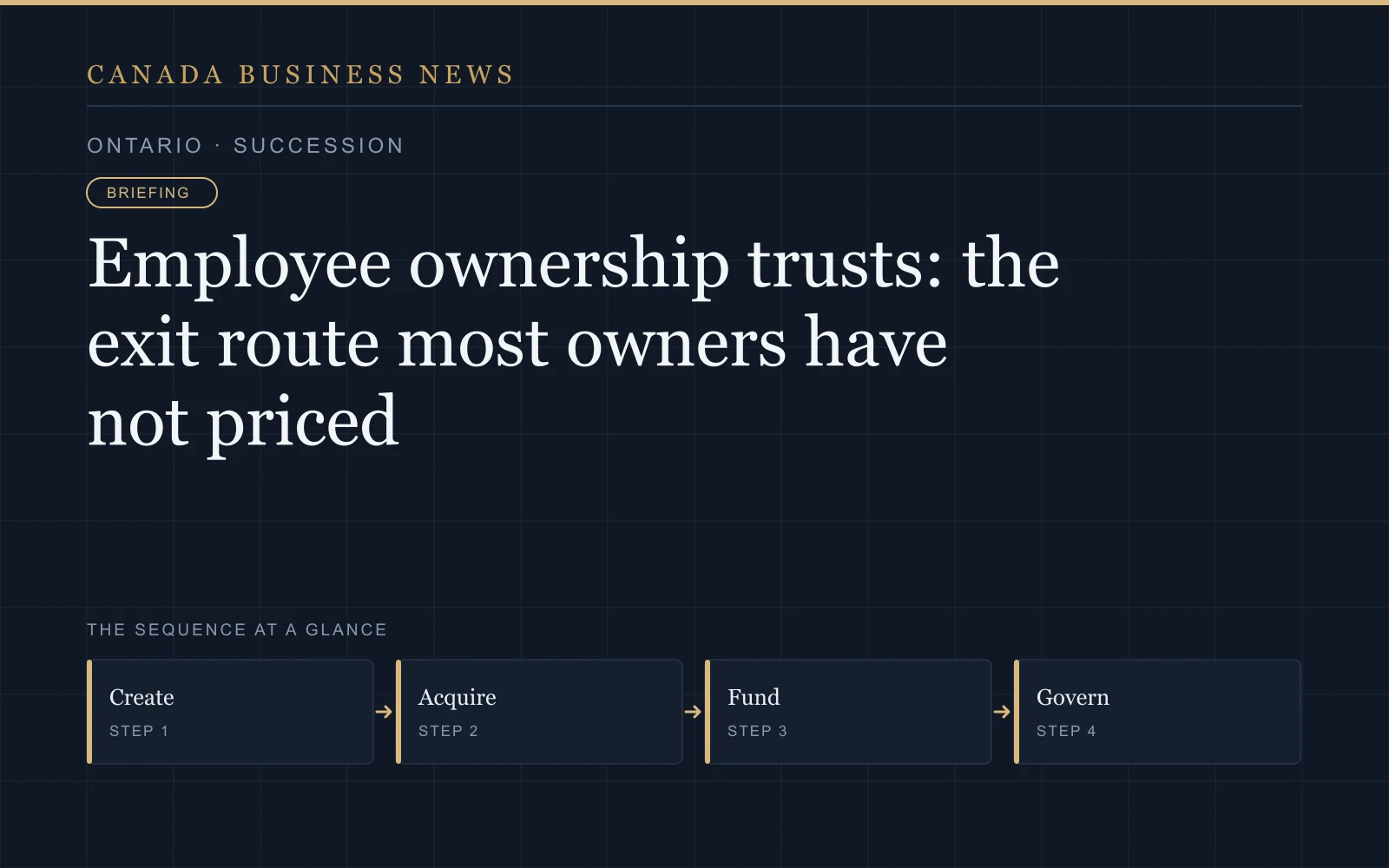
The structure in four moves, funded by the business itself.
A qualifying trust is established for the benefit of employees.
The trust buys the owner's shares under the legislation's conditions.
The purchase is paid over years from company earnings, not employee savings.
Statutory governance protects the employee-beneficiary interest.
Source basis: CRA trust guidance
Canada added employee ownership trusts to the tax system to give retiring owners a third path between the family transfer that is not available and the external sale that is not attractive. The structure lets a trust acquire and hold the business on behalf of its employees, paid for over time out of the company's own earnings.
The policy intent is explicit: keep viable firms operating, in place, when the founder leaves. For owners whose realistic alternative is a wind-down, the structure deserves a serious look.
How the structure works
In outline: a trust is created for the benefit of employees, the trust buys the owner's shares, and the purchase is funded over years from company profits rather than employee savings. Employees do not individually buy shares; the trust holds them collectively, and governance rules in the legislation protect the employee-beneficiary interest.
The CRA's trust guidance sets the qualifying conditions on the trust, the business, and the transaction. These conditions are detailed and unforgiving, which is why every serious EOT process starts with specialist tax advice rather than a term sheet.
The incentive window
Federal budgets attached a temporary capital gains incentive to qualifying EOT sales, announced as an exemption of up to $10 million on eligible dispositions within a defined window. Amounts, conditions, and sunset dates are policy variables, so the current CRA and Finance materials govern; the operating point is that Ottawa is actively subsidizing this exit route right now.
For a seller comparing an EOT against an external sale, the incentive can close much of the price gap an employee-funded structure would otherwise carry.
Which firms actually fit
The structure fits profitable, stable firms with earnings that can genuinely fund the buyout: steady service companies, distributors, manufacturers, professional-adjacent firms with strong second-tier management. It fits badly where earnings are volatile, where the owner is the product, or where the team is too small to sustain governance.
The honest test is whether the business can pay for itself over seven to ten years while remaining competitive. Sellers who like the answer should assemble the advisory team early; the runway for a clean EOT is measured in years, not months.
Government links used for this briefing
These links point to federal, provincial, territorial, municipal, intergovernmental, or official data sources. Readers should confirm current eligibility and deadlines directly with the issuing government before applying.
Official CRA trust guidance including the employee ownership trust category and its conditions.
Federal / ComplianceSelling a businessCanada Revenue AgencyThe disposition framework an EOT sale sits inside.
Federal / ProgramBusiness Development Bank of CanadaBDC (federal Crown corporation)Transition financing relevant where an EOT buyout needs external capital.