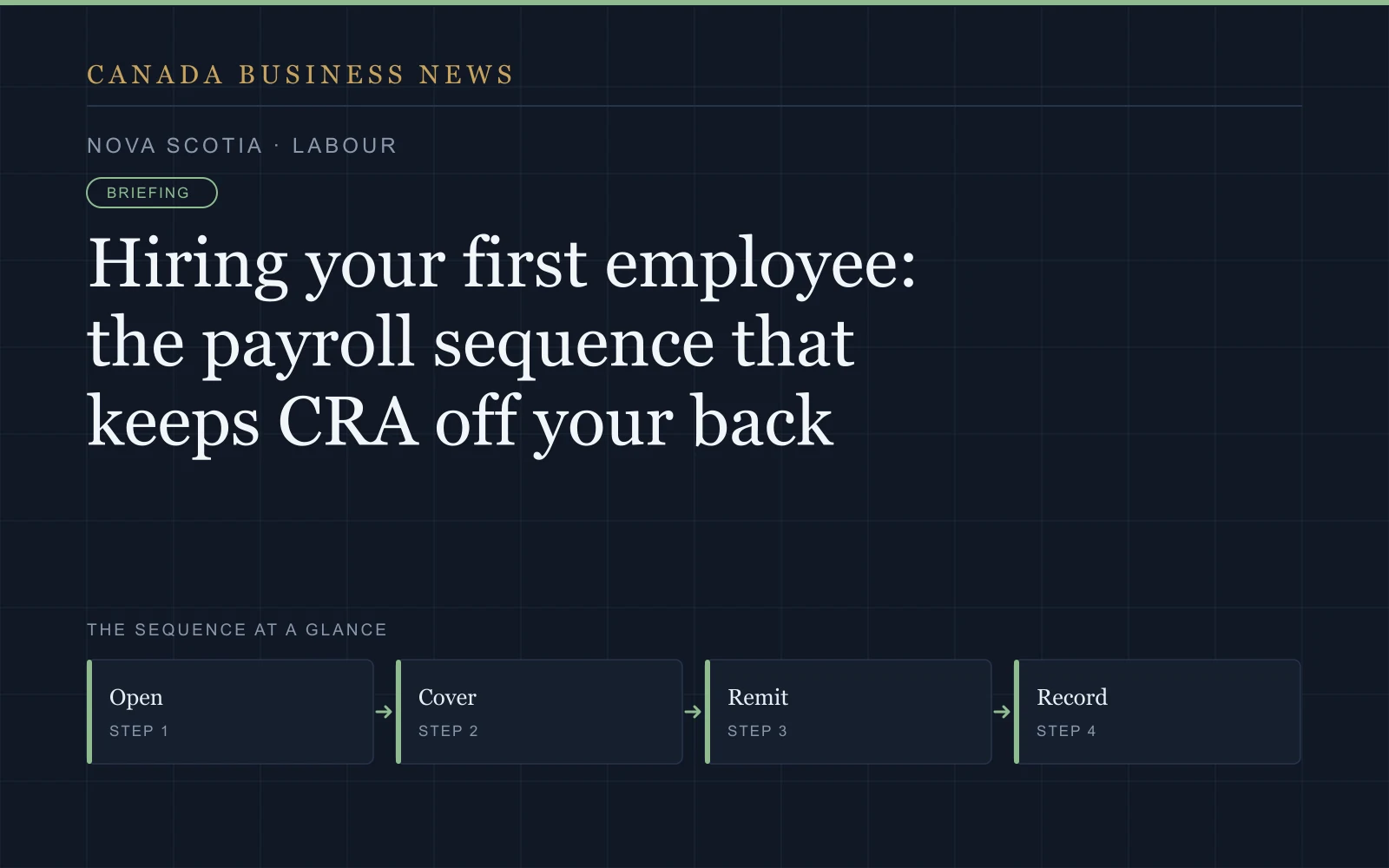
First-hire compliance sequence
The order of operations between the job offer and a compliant payday.
Payroll program account via My Business Account; collect TD1s and SIN.
Register with the provincial workers compensation board before work starts.
Withhold and remit on the CRA schedule; the due date drives automatic penalties.
Issue the ROE on interruption of earnings per the guide's deadlines and codes.
Source basis: CRA payroll pages and ESDC ROE guide
The first hire converts a business from a tax filer into a withholding agent. From the first payday, the firm is collecting income tax, CPP, and EI on the government's behalf, and the CRA treats those trust amounts more seriously than almost anything else a small business touches.
The good news is that the sequence is short, documented, and entirely doable in a week. The firms that get burned are the ones that hire first and read later.
Before the first payday
Open a payroll program account under the business number through CRA My Business Account. Collect the employee's TD1 federal and provincial forms and social insurance number. Confirm the pay frequency and calculate deductions using the CRA's payroll deductions tools referenced on the payroll pages.
In parallel, register with the provincial workers compensation board where required. In Nova Scotia and most provinces, coverage obligations can begin with the first worker, and retroactive registration after an incident is the expensive version.
The rhythm: deduct, remit, record
Each pay run withholds income tax, CPP, and EI, and adds the employer's own CPP and EI shares. Remittances are due on the CRA's schedule for the firm's remitter type, and the due date is the obligation that generates automatic penalties when missed. A calendar reminder is the cheapest compliance tool in Canadian payroll.
When an employee stops working, interruption of earnings triggers the Record of Employment. The ROE guide sets the deadlines and codes; issuing it late or wrong delays the worker's EI and draws exactly the attention a small employer does not want.
The provincial layer owners forget
Employment standards, minimum wage, overtime, vacation pay, holiday pay, and termination rules, are provincial. The federal payroll layer being clean does not make an unlawful schedule lawful. Nova Scotia's provincial portals carry the standards that apply, and reading them once before drafting the offer letter prevents the disputes that cost multiples later.
Government links used for this briefing
These links point to federal, provincial, territorial, municipal, intergovernmental, or official data sources. Readers should confirm current eligibility and deadlines directly with the issuing government before applying.
Official CRA hub for payroll accounts, deductions, remittance schedules, and employer obligations.
Federal / ComplianceRecord of Employment guideEmployment and Social Development CanadaOfficial ROE guide covering deadlines and codes when earnings are interrupted.
Federal / ComplianceCRA My Business AccountCanada Revenue AgencyThe portal used to open the payroll program account and manage remittances.
Provincial / CompliancePrograms and servicesGovernment of Nova ScotiaProvincial portal covering employment standards and workers compensation registration.